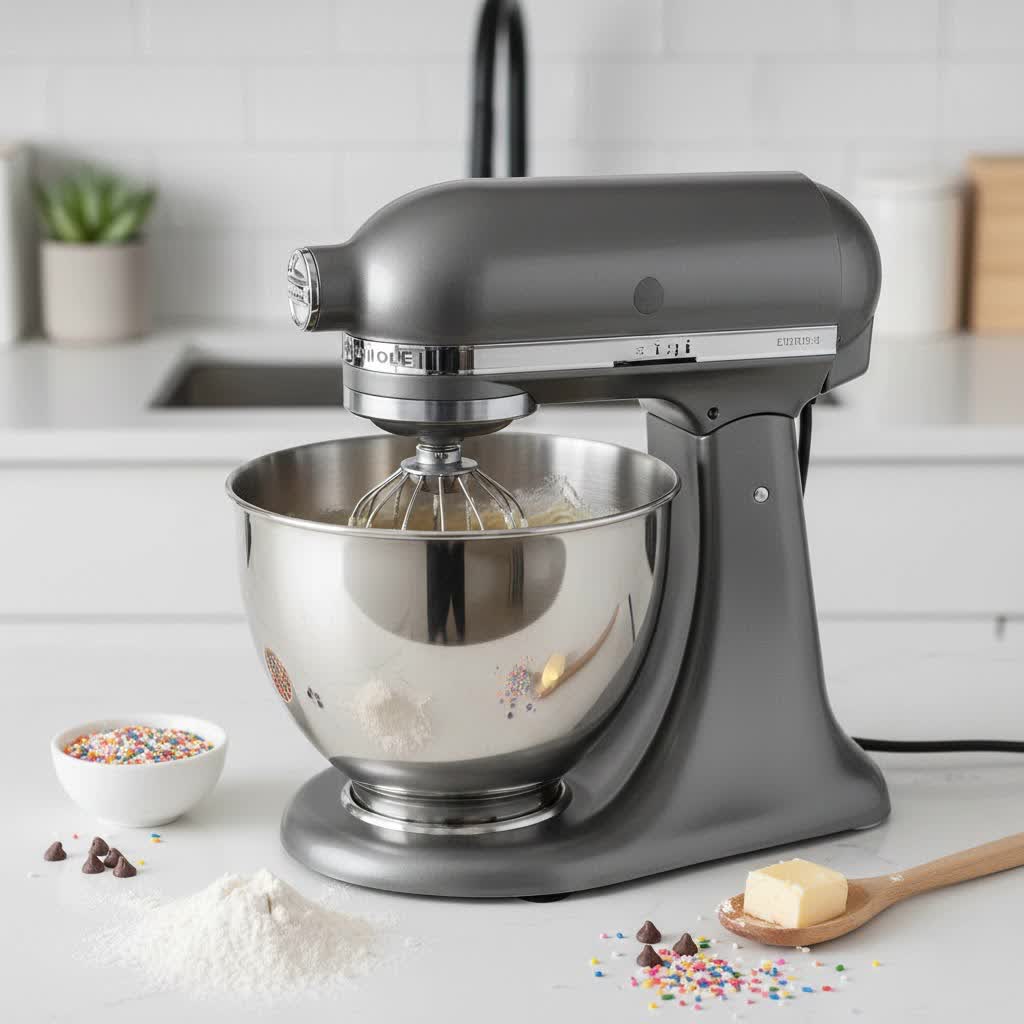
The aroma of freshly baked cookies is one of life’s simple pleasures, but the journey to that perfect batch often begins with a formidable opponent: stiff cookie dough. Whether you’re making chewy chocolate chip, hearty oatmeal, or dense peanut butter cookies, handling thick dough can be a strenuous task, quickly turning baking into a tiresome chore. This is where a heavy-duty stand mixer becomes your most valuable kitchen ally, transforming a laborious process into an effortless experience. If you’ve ever wrestled with a spoon in a bowl of unyielding dough, you understand the necessity of a machine built for power and resilience. This comprehensive guide will navigate the world of stand mixers, revealing the crucial features and top models that stand up to the challenge of even the most stubborn cookie dough, ensuring perfect results every time.
What is a Stand Mixer?
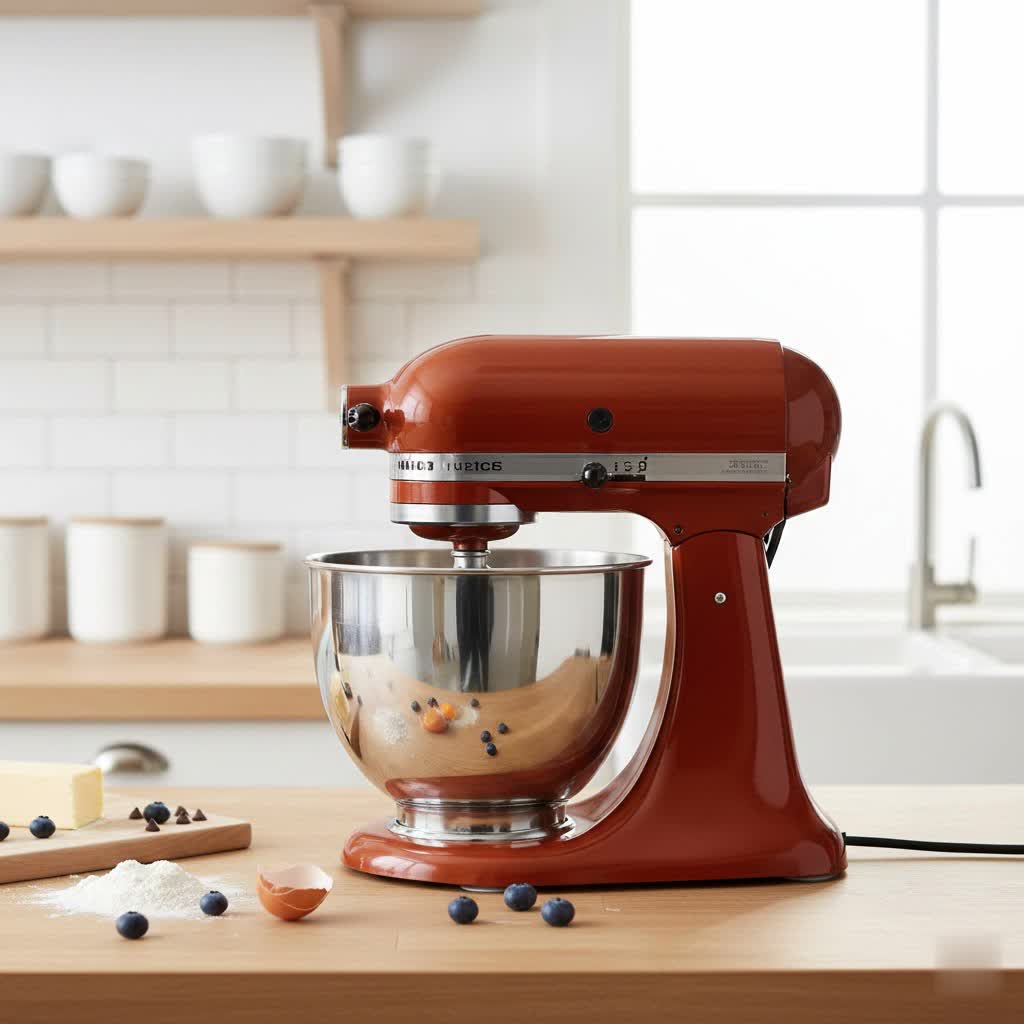
A stand mixer is a countertop appliance designed to automate the repetitive tasks of mixing, whisking, and kneading. Unlike a hand mixer, it features a motor-driven head that holds various attachments, allowing for hands-free operation. The bowl remains stationary or rotates independently while the attachment moves, thoroughly combining ingredients.
The concept of mechanized mixing dates back to the late 19th century, with the first commercial stand mixer, the Hobart electric mixer, introduced in 1908. KitchenAid later brought the technology to home kitchens in 1919 with its iconic “H-5” model. Over the decades, stand mixers have evolved significantly, incorporating more powerful motors, diverse attachments, and advanced features, transforming from a luxury item into an indispensable tool for home bakers and professional chefs alike.
Types of Stand Mixers
When considering a stand mixer, especially for demanding tasks like stiff cookie dough, understanding the different types is crucial. Each design offers distinct advantages and limitations.
Stand Mixer Designs: Tilt-Head vs. Bowl-Lift
The two primary designs for stand mixers are tilt-head and bowl-lift, each offering a different approach to accessing the bowl and attachments.
-
Tilt-Head Stand Mixers: These mixers feature a head that tilts back to allow for easy access to the mixing bowl and attachments. They are generally more compact and often preferred for smaller kitchens or occasional baking. While many tilt-head models can handle standard cookie dough, their stability may be compromised when tackling exceptionally stiff or large batches of dough, potentially leading to the mixer “walking” on the countertop.
-
Bowl-Lift Stand Mixers: In contrast, bowl-lift mixers have a stationary head, and the bowl is securely attached to arms that lift it into the mixing position. This design provides superior stability and power, making them the preferred choice for heavy-duty tasks such as kneading dense bread dough or mixing large quantities of stiff cookie dough. Their robust construction minimizes movement and vibration, ensuring consistent performance under heavy loads.
|
Our Picks for the Best Stand mixer in 2026
As an Amazon Associate I earn from qualifying purchases.
|
||
| Num | Product | Action |
|---|---|---|
| 1 | Hamilton Beach Electric Stand Mixer, 4 Quarts, Dough Hook, Flat Beater Attachments, Splash Guard, 7 Speeds with Whisk, Easy-Carry Top Handle, Red |

|
| 2 | KitchenAid Artisan Series 5 Quart Tilt Head Stand Mixer, KSM150PS, Juniper |
|
| 3 | KitchenAid Classic Series 4.5 Quart Tilt-Head Stand Mixer K45SS, Onyx Black |
|
| 4 | Martha Stewart Tilt-Head Stand Mixer, 12 Speed, 5.3QT Stainless Steel Bowl, Splash Guard with Pour Chute, Whisk, Dough Hook, Flat Beater, Electric Kitchen Baking Mixer, Bread, Cake, Whip, Linen White |
|
| 5 | Stand Mixer, Kitchen in the box 3.2Qt Small Electric Food Mixer,6 Speeds Portable Lightweight Kitchen Mixer for Daily Use with Egg Whisk,Dough Hook,Flat Beater (Purple) |
|
| 6 | Stand Mixer Body with Stainless Steel Cladding Pro-Grade Powerful Kitchen Mixer for Baking Bread Dough Cake 10+p Speed Tilt-Head Electric Food Mixer With 6.5QT Bowl Dough Hook Wire Whisk Flat Beater |
|
| 7 | Camic Stand Mixer, 4.2QT+5.3QT Two bowls Electric Food Mixer, 10 Speeds with Digital setting 3-IN-1 Kitchen Mixer for Baking Cakes Cookie Bread Salad with Egg Whisk,Dough Hook,Flat Beater (Black) |
|
| 8 | Kitchen in the box Stand Mixer,3.2Qt Small Electric Food Mixer,6 Speeds Portable Lightweight Kitchen Mixer for Daily Use with Egg Whisk,Dough Hook,Flat Beater (Black) |
|
| 9 | KitchenAid Classic Series 4.5 Quart Tilt-Head Stand Mixer K45SS, White |
|
| 10 | Hamilton Beach Electric Stand Mixer, 4 Quarts, Dough Hook, Flat Beater Attachments, Splash Guard 7 Speeds with Whisk, Black |
|
Hand Mixers
While the focus here is on stand mixers for heavy-duty tasks, it’s worth noting that hand mixers exist. These handheld devices are suitable for lighter batters and occasional small batches of cookie dough. However, for genuinely stiff dough or frequent baking, they lack the power, stability, and hands-free convenience of a dedicated stand mixer. Attempting to mix thick cookie dough with a hand mixer can quickly lead to motor strain and user fatigue.
Industrial Stand Mixers
For commercial kitchens, bakeries, or extremely high-volume home bakers, industrial-grade stand mixers offer unparalleled power and capacity. These machines are built with extremely robust motors and components, designed to handle continuous heavy loads without faltering. Brands like Famag Grilletta or Waring Luna represent this category, often featuring specialized spiral dough hooks and larger capacities suitable for kilograms of flour. While often overkill for the average home kitchen, they highlight the pinnacle of dough-mixing technology.
Choosing Your Heavy-Duty Stand Mixer (Buying Guide)
Selecting the best stand mixer for stiff cookie dough involves more than just picking a pretty color. You need a workhorse that won’t buckle under pressure. Here are the critical factors to consider:
Determine Your Usage Needs
Before diving into specifications, assess your baking habits.
- Family Baker (Occasional/Moderate): If you make cookies a few times a month, a robust home-grade stand mixer (likely a bowl-lift or a very powerful tilt-head) with a 5-6 quart capacity might suffice.
- Small Business/Frequent Baker: For weekly or daily batches, or if you bake for events, you’ll need higher capacity (6-7 quarts) and a mixer specifically engineered for heavy use to prevent motor burnout.
- Professional/Enthusiast: If you’re tackling multiple large batches of artisan cookies, or complex doughs regularly, consider higher-end professional models known for their endurance and powerful motors.
Motor Power and Torque
Many mistakenly believe higher wattage automatically means better performance. While important, it’s not the sole indicator. A stand mixer’s ability to maintain consistent speed and deliver adequate power under heavy load—known as torque—is paramount for stiff dough.
- Wattage: For heavy dough, look for stand mixers with at least 500 watts. Some robust models designed for dough can exceed 800-1400 watts, providing ample power.
- Torque & Gearing: Mixers with all-metal gears and efficient direct-drive motors often deliver superior torque. This allows the mixer to power through dense mixtures without straining or overheating, even if their raw wattage numbers appear lower than some belt-driven counterparts. Prioritize mixers renowned for their torque and sustained power.
Bowl Capacity
The size of your mixing bowl directly impacts the quantity of dough you can prepare.
- For Stiff Cookie Dough: A 5-quart bowl is generally suitable for standard double batches. However, for larger recipes, multiple batches, or very stiff doughs that tax the mixer, a 6-quart or 7-quart bowl provides more working space and prevents overflow. Larger bowls also give the dough more room to move, reducing strain on the motor.
Attachments
The right attachments are crucial for effective mixing.
- Flat Beater (Paddle Attachment): This is your primary tool for creaming butter and sugar and incorporating flour into stiff cookie dough. Look for models with sturdy, well-designed flat beaters that scrape the sides of the bowl efficiently. Some brands offer flexible edge beaters that reduce the need for manual scraping.
- Dough Hook: While typically used for yeasted bread doughs, a dough hook can be surprisingly effective for some very stiff cookie doughs, particularly those with a texture closer to bread dough. There are two main types:
- C-hook: Standard design, often comes with tilt-head mixers.
- Spiral hook: More efficient for kneading heavy doughs, often found on bowl-lift or higher-end models. Ensure your mixer’s gearing is compatible with a spiral hook if considering an upgrade.
Durability and Construction
A heavy-duty stand mixer is an investment, and you want it to last.
- Material: Look for mixers with robust metal construction, especially in the motor housing and gears. While some excellent mixers have durable plastic outer casings (like Bosch), metal internal components are key to longevity under heavy loads.
- Stability: A mixer designed for stiff dough should remain stable on your countertop. Models with heavy bases and effective suction feet prevent “walking” or excessive vibration, which can be a sign of a struggling motor or unstable design.
Brand Reputation and Price
Established brands often have a track record of reliability and better customer support.
- Reputation: Brands like KitchenAid (Pro Line), Bosch, and Ankarsrum are consistently praised for their performance with heavy dough.
- Price: Expect to pay more for truly heavy-duty mixers. They are an investment, but the durability and performance gains are usually worth the higher cost, especially if you bake frequently. Factor in the long-term value over initial savings.
Top Contenders for Stiff Cookie Dough
When it comes to tackling the most challenging cookie doughs, certain stand mixers consistently rise to the top. These machines are engineered for power, durability, and efficiency, making your baking endeavors a breeze.
KitchenAid (Pro Line/Bowl-Lift Models)
KitchenAid is an iconic brand, but for truly stiff cookie dough, you’ll want to gravitate towards their Pro Line or Bowl-Lift series rather than the standard Artisan tilt-head models.
- Pros:
- Powerful Motors: Pro Line models typically feature higher wattage and more robust motors designed to handle heavier loads.
- Enhanced Stability: The bowl-lift design provides excellent stability, preventing the mixer from “walking” on the counter when dealing with dense doughs.
- Versatility & Attachments: KitchenAid offers a vast array of attachments, expanding its utility beyond just mixing.
- Iconic Design: Aesthetically pleasing and available in numerous colors.
- Cons:
- Artisan Limitations: Standard tilt-head Artisan models (often 300-325W) can struggle with very stiff dough or large batches, leading to motor strain and overheating. Some users report motor burnout over time with frequent heavy use.
- Price: High-end KitchenAid models can be a significant investment.
Bosch Universal Plus Stand Mixer
The Bosch Universal Plus is a favorite among serious bakers, particularly those who frequently work with bread and stiff doughs. Its unique design sets it apart.
- Pros:
- Exceptional Dough Handling: Bosch excels with heavy, dense doughs thanks to its high-torque motor and unique bottom-drive mechanism with twin kneading hooks. It rarely strains or overheats.
- Large Capacity: Typically comes with larger bowls (6.5-8 quarts), ideal for big batches.
- Open Bowl Design: The motor is beneath the bowl, leaving the top wide open for easy ingredient addition.
- Relatively Quiet: Often operates more quietly than comparable high-power mixers during heavy use.
- Cons:
- Aesthetics: Its design is more utilitarian than stylish, often available in fewer colors.
- Center Post: The bowl has a center post, which can make scraping and cleaning slightly less convenient for some users.
- Plastic Housing: While durable, the plastic outer casing may feel less premium than all-metal competitors.
Ankarsrum Assistent Original
A true cult favorite, the Ankarsrum Assistent Original stands out with its distinct design where the bowl rotates while the attachment remains stationary.
- Pros:
- Superior Dough Kneading: Specialized attachments (roller and scraper, dough hook) mimic hand-kneading, making it exceptional for all types of dough, especially higher-hydration doughs.
- Powerful & Quiet: Known for its robust motor and remarkably quiet operation, even under heavy loads.
- Durability: Built to last, with high-quality construction.
- Open Bowl: Easy to add ingredients as the bowl spins.
- Cons:
- Learning Curve: Its unique design takes some getting used to.
- Price: One of the most expensive options on the market.
- Footprint: Can be quite large and heavy.
Kenwood Titanium Chef Baker XL
Kenwood has a strong reputation for powerful and reliable kitchen machines, and the Titanium Chef Baker XL is a testament to that, offering a robust option for dough enthusiasts.
- Pros:
- Very Powerful Motor: Features high-wattage motors (e.g., 1400W) that handle heavy doughs with ease.
- Versatile: Excellent performance across various tasks, from whisking to kneading.
- Built-in Scales (on some models): A convenient feature for precise baking.
- Comes with Multiple Bowls/Attachments: Often includes multiple bowls and a good set of attachments.
- Cons:
- Price: Can be on the higher end, comparable to KitchenAid Pro Line models.
- Size: Can be quite large, requiring ample counter space.
Comparison Table: Heavy-Duty Stand Mixers for Stiff Cookie Dough
| Feature | KitchenAid (Pro Line/Bowl-Lift) | Bosch Universal Plus | Ankarsrum Assistent Original | Kenwood Titanium Chef Baker XL |
|---|---|---|---|---|
| Design | Bowl-Lift, Planetary Action | Bottom-Drive, Open Bowl | Bowl Rotates, Stationary Arm | Tilt-Head, Planetary Action |
| Typical Wattage | 500-750W | 800W+ | 600W+ | 1400W+ |
| Capacity | 6-7 Quarts | 6.5-8 Quarts | 7 Liters (~7.4 Quarts) | 5L & 7L (dual bowls) |
| Dough Performance | Excellent for heavy doughs | Exceptional, no straining | Outstanding, gentle kneading | Excellent, powerful |
| Key Advantage | Stability, attachment ecosystem | High torque, open bowl | Unique kneading action, quiet | Raw power, integrated features |
| Common Drawback | Artisan struggles, motor wear | Center post, aesthetic | Learning curve, cost | Size, cost |
| Price Range | $$$ | $$-$$$ | $$$$ | $$$ |
Using and Maintaining Your Stand Mixer for Optimal Dough Mixing
Even the best heavy-duty stand mixer needs proper usage and care to perform optimally and last for years. Understanding how to use it safely and efficiently, especially with stiff cookie dough, is vital.
Safe and Effective Usage
- Don’t Overload: Always respect your mixer’s stated capacity limits. Overloading, even a heavy-duty mixer, can strain the motor and attachments. For very large recipes, divide the dough into smaller batches.
- Start Slow: When adding dry ingredients or beginning to mix stiff dough, always start on the lowest speed. This prevents flour clouds and ensures ingredients are properly incorporated before increasing speed. Gradually increase speed as the dough comes together.
- Use the Right Attachment: For cookie dough, the flat beater (paddle attachment) is usually the go-to. For exceptionally stiff or very large batches, a dough hook might be considered, but generally, the paddle is best for developing the proper cookie texture.
- Monitor Your Mixer: Pay attention to the sounds and vibrations. While some movement is normal with stiff dough, excessive “walking” or a struggling motor sound indicates the mixer is being overtaxed. If this happens, reduce the load or stop the mixer to prevent damage.
- Scrape the Bowl: Even with planetary action, ingredients can stick to the sides and bottom. Periodically stop the mixer and use a rubber spatula to scrape down the bowl, ensuring all ingredients are evenly incorporated.
Cleaning and Storage
Proper cleaning and storage will extend the life of your stand mixer and its attachments.
- Unplug First: Always unplug the mixer before cleaning or changing attachments to prevent accidental activation.
- Clean Immediately: It’s easiest to clean attachments and the bowl immediately after use, before dough dries and hardens.
- Attachments and Bowl: Most stainless steel bowls and standard attachments (flat beater, dough hook) are dishwasher safe, but always check your manufacturer’s instructions. Handwashing can be gentler and prolong their life.
- Mixer Body: Wipe down the mixer body with a damp cloth. Never immerse the motor head in water. Remove any dough or flour residue from crevices.
- Storage: Store your mixer in a dry place. Consider a mixer cover to protect it from dust if it’s stored on the countertop. Keep attachments organized and easily accessible.
Common Issues and Troubleshooting
Even with a heavy-duty mixer, you might encounter minor issues, especially with demanding doughs.
- Mixer “Walking” or Shaking: This is often a sign of heavy load. Ensure the mixer is on a stable, level surface. If it persists, reduce the batch size or consider if a bowl-lift model might be more suitable for your needs.
- Overheating: If your mixer feels hot to the touch or emits a burning smell, turn it off immediately and let it cool down. This is a critical indicator of motor strain. Overheating can lead to permanent damage.
- Attachment Not Reaching Bottom: If your flat beater isn’t quite reaching the bottom of the bowl, you may need to adjust the beater-to-bowl clearance. Consult your mixer’s manual for instructions on how to do this.
Stand Mixers and Baking Success
The right heavy-duty stand mixer doesn’t just simplify the process; it significantly enhances the quality of your baked goods, particularly stiff cookie doughs.
Investing in a powerful stand mixer ensures that ingredients are thoroughly and consistently combined. This even mixing creates a uniform dough texture, which is crucial for cookies that bake evenly and have a consistent bite. Without proper mixing, you can end up with pockets of unmixed flour or unevenly distributed ingredients, leading to dry spots or overly crumbly cookies.
Furthermore, a stand mixer reduces the physical strain of baking. Kneading and mixing thick dough by hand can be exhausting, deterring many from baking frequently. With a robust stand mixer, you can enjoy the creative process without the muscle ache, allowing you to experiment with new recipes and bake more often. This not only makes baking more accessible but also contributes to a healthier, more active lifestyle by encouraging homemade treats.
Conclusion
Choosing the right heavy-duty stand mixer for stiff cookie dough is about empowering your baking journey. It’s an investment in efficiency, consistency, and culinary enjoyment. When evaluating options, remember that paramount importance lies in motor power, robust torque, and inherent stability, with brands like KitchenAid’s Pro Line, Bosch Universal Plus, and Ankarsrum Assistent Original leading the pack for their ability to effortlessly conquer the densest of doughs.
By understanding your needs and focusing on these critical features, you can select a stand mixer that will not only withstand the rigors of stiff cookie dough but also become a cherished and reliable partner in your kitchen for years to come. What delicious, perfectly mixed cookies will you bake next with your new heavy-duty stand mixer?
FAQ
What is the best stand mixer wattage for stiff cookie dough?
While wattage is a factor, prioritizing a mixer’s torque and ability to maintain speed under load is more important. For stiff cookie dough, a minimum of 500 watts is generally recommended, with higher wattage (e.g., 800W+) often indicating more robust performance and less strain on the motor during heavy tasks.
Can a KitchenAid Artisan handle stiff cookie dough?
A KitchenAid Artisan tilt-head mixer can handle standard cookie dough, but it may struggle with very stiff or large batches, potentially leading to motor strain and instability. For frequent heavy dough tasks, KitchenAid’s more powerful bowl-lift or Pro Line models are a more reliable choice.
Why does my stand mixer “walk” on the counter with stiff dough?
A stand mixer “walking” on the counter indicates it’s struggling with the heavy load of stiff dough. This can be due to insufficient motor power, a less stable design (common with tilt-head models), or an overloaded bowl. Reducing batch size or upgrading to a more stable bowl-lift mixer designed for heavy-duty tasks can help.
What’s the difference between a dough hook and a flat beater for cookie dough?
The flat beater (paddle attachment) is typically used for creaming butter and sugar and mixing most cookie doughs, as it incorporates ingredients thoroughly without over-developing gluten. A dough hook is primarily for kneading yeasted bread dough to build gluten structure, though it can be used for exceptionally stiff, bread-like cookie doughs in some instances.