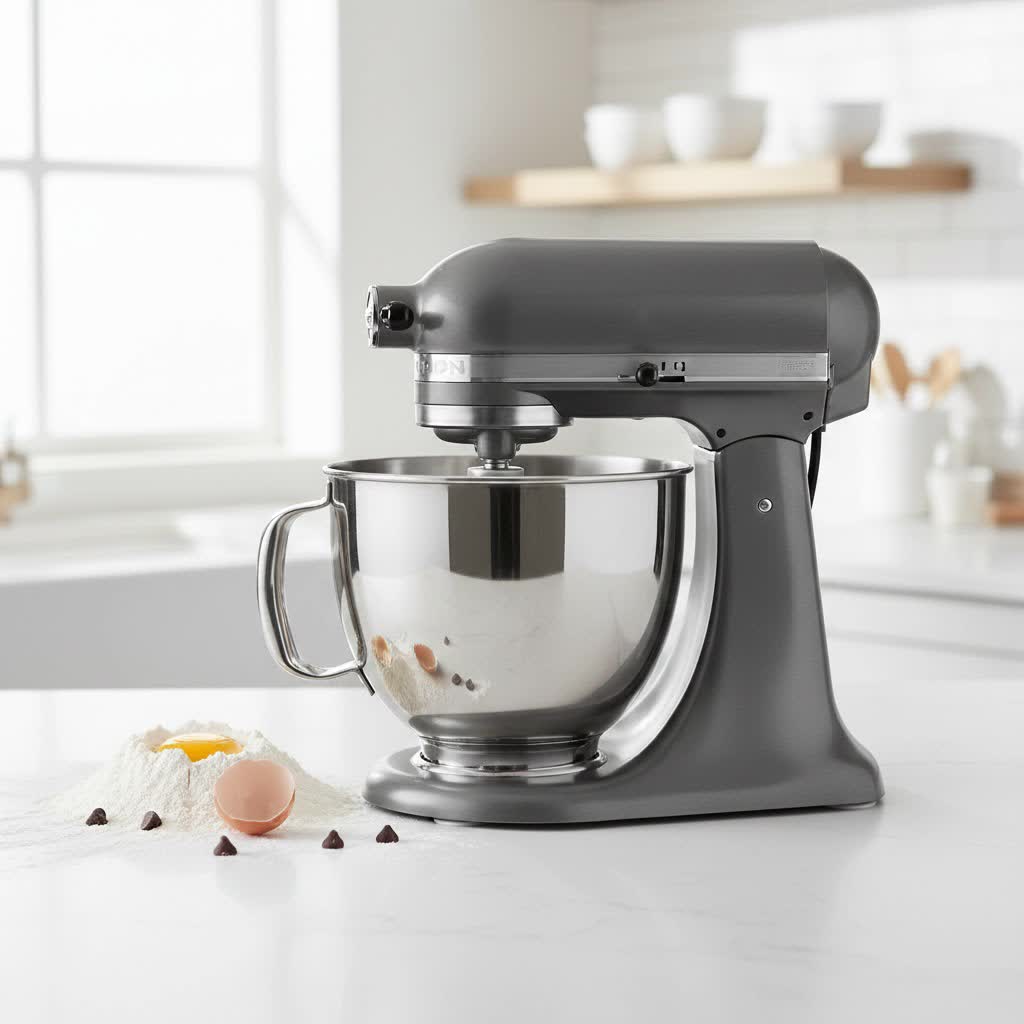
For any passionate baker, the stand mixer isn’t just an appliance; it’s the heart of the kitchen, tirelessly transforming raw ingredients into culinary masterpieces. But when faced with the choice between a 5-quart and a 6-quart model, the decision can feel more complex than perfecting a soufflé. This guide will meticulously break down the nuances, helping you select the ideal stand mixer to be your steadfast companion in the kitchen.
What is a Stand Mixer?
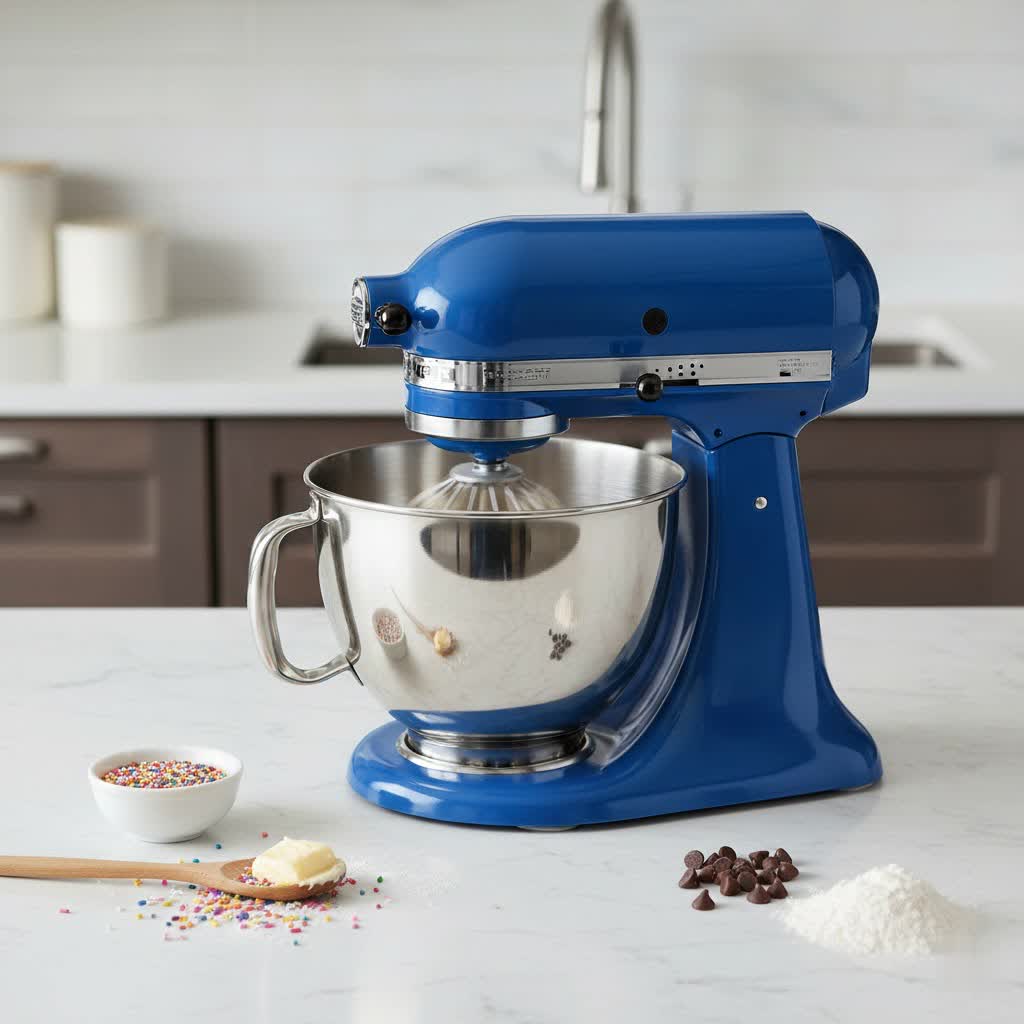
A stand mixer is an indispensable kitchen tool featuring a powerful motor, a stationary base, and a rotating beater or whisk that thoroughly mixes ingredients in a bowl. Unlike handheld mixers, stand mixers offer hands-free operation and superior power, making them adept at tasks ranging from whipping delicate egg whites to kneading heavy bread dough. Its primary purpose is to simplify and automate strenuous mixing tasks, ensuring consistent results every time.
The concept of a mechanized mixer dates back to the late 19th century, with the first commercial stand mixers appearing in the early 20th century. Over the decades, they have evolved from purely industrial machines into beloved household staples, continuously refined in terms of power, efficiency, and ergonomic design, with various bowl capacities to suit every baker’s need.
Stand Mixer Categories and Capacity Overview
Stand mixers come in a range of sizes, generally categorized as mini (2-3.5 quarts), medium (4.5-5.5 quarts), and large (6-8 quarts and above). While mini mixers cater to single servings or very light tasks, the medium to large categories, particularly the 5-quart and 6-quart models, represent the most popular choices for home bakers. These sizes strike a balance between countertop footprint and mixing capability, but understanding their specific distinctions is key to making an informed decision.
The difference of just one quart might seem negligible, yet it profoundly impacts the types of recipes you can tackle, the batch sizes you can produce, and even the mixer’s physical design and power. We will focus on these two popular sizes, dissecting their features to reveal which will truly serve your baking ambitions best.
The 5-Quart Stand Mixer: Your Versatile Everyday Companion
The 5-quart stand mixer is arguably the most common and beloved size for home bakers, often embodying the iconic tilt-head design. It’s renowned for its versatility, balancing sufficient capacity for most daily baking needs with a relatively compact footprint.
Typically, a 5-quart mixer can comfortably handle:
- Up to 9 dozen standard-sized cookies in a single batch.
- Enough dough for 3-4 loaves of bread.
- Batters for cakes, cupcakes, and muffins for a medium-sized family or small gathering.
- Whipping several cups of cream or egg whites.
Many 5-quart models feature a tilt-head design, which means the motor head lifts up and tilts back, providing easy access to the bowl and attachments for adding ingredients or scraping down the sides. This design also generally makes them easier to store under standard kitchen cabinets. Power-wise, these mixers usually come with a motor in the range of 300-325 watts, which is perfectly adequate for most home baking tasks, from light batters to moderate bread doughs.
Pros & Cons of 5-Quart Mixers:
Pros:
- Versatile: Excellent for a wide range of everyday recipes and batch sizes.
- Compact: Generally smaller and lighter, fitting more easily on countertops and under cabinets.
- User-Friendly: Tilt-head design offers convenient access for adding ingredients and changing attachments.
- Affordable: Often more budget-friendly than their larger counterparts.
- Aesthetic Variety: Available in a vast array of colors and finishes, allowing for personal expression in the kitchen.
Cons:
- Capacity Limit: May struggle or require multiple batches for very large recipes or when baking for a crowd.
- Less Power: While sufficient for most, the motor might strain with extremely dense or stiff doughs like double batches of whole wheat bread.
- Stability: Some tilt-head models can exhibit slight “head wobble” when mixing very heavy doughs.
|
Our Picks for the Best Stand mixer in 2026
As an Amazon Associate I earn from qualifying purchases.
|
||
| Num | Product | Action |
|---|---|---|
| 1 | Martha Stewart Tilt-Head Stand Mixer, 12 Speed, 5.3QT Stainless Steel Bowl, Splash Guard with Pour Chute, Whisk, Dough Hook, Flat Beater, Electric Kitchen Baking Mixer, Bread, Cake, Whip, Linen White |

|
| 2 | Hamilton Beach Electric Stand Mixer, 4 Quarts, Dough Hook, Flat Beater Attachments, Splash Guard, 7 Speeds with Whisk, Easy-Carry Top Handle, Red |
|
| 3 | Stand Mixer Body with Stainless Steel Cladding Pro-Grade Powerful Kitchen Mixer for Baking Bread Dough Cake 10+p Speed Tilt-Head Electric Food Mixer With 6.5QT Bowl Dough Hook Wire Whisk Flat Beater |
|
| 4 | Hamilton Beach Electric Stand Mixer, 4 Quarts, Dough Hook, Flat Beater Attachments, Splash Guard 7 Speeds with Whisk, Black |
|
| 5 | Kitchen in the box Stand Mixer,3.2Qt Small Electric Food Mixer,6 Speeds Portable Lightweight Kitchen Mixer for Daily Use with Egg Whisk,Dough Hook,Flat Beater (Black) |
|
| 6 | KitchenAid Artisan Series 5 Quart Tilt Head Stand Mixer, KSM150PS, Juniper |
|
| 7 | KitchenAid Classic Series 4.5 Quart Tilt-Head Stand Mixer K45SS, White |
|
| 8 | KitchenAid Classic Series 4.5 Quart Tilt-Head Stand Mixer K45SS, Onyx Black |
|
| 9 | Stand Mixer, Kitchen in the box 3.2Qt Small Electric Food Mixer,6 Speeds Portable Lightweight Kitchen Mixer for Daily Use with Egg Whisk,Dough Hook,Flat Beater (Purple) |
|
| 10 | Camic Stand Mixer, 4.2QT+5.3QT Two bowls Electric Food Mixer, 10 Speeds with Digital setting 3-IN-1 Kitchen Mixer for Baking Cakes Cookie Bread Salad with Egg Whisk,Dough Hook,Flat Beater (Black) |
|
The 5-quart stand mixer is ideal for average households, regular bakers who prepare diverse recipes, and those with limited kitchen space. If your baking primarily involves cakes, cookies, frosting, and occasional bread, this size offers exceptional value and performance.
The 6-Quart Stand Mixer: Power and Volume for Serious Bakers
Stepping up to a 6-quart stand mixer signifies a commitment to larger batches and more demanding recipes. These models are typically designed with a bowl-lift mechanism, prioritizing stability and power to tackle the heaviest mixing tasks with ease.
A 6-quart mixer excels at producing significantly larger quantities:
- Up to 13-14 dozen standard-sized cookies in one go.
- Enough dough for 4-5 loaves of bread or multiple pizzas.
- Large quantities of mashed potatoes or thick batters for holiday baking.
The defining characteristic of most 6-quart mixers is their bowl-lift design. Instead of the head tilting back, the bowl locks into place on arms, and a lever raises it up to meet the beater. This design provides superior stability and support for the motor and bowl, especially when handling heavy, dense ingredients. Motors in 6-quart models are generally more powerful, often ranging from 500-575 watts or more, built to handle sustained, heavy-duty mixing without overheating or straining.
Pros & Cons of 6-Quart Mixers:
Pros:
- High Capacity: Perfect for large families, frequent entertaining, or preparing big batches for events.
- Robust Power: More powerful motors effortlessly handle dense doughs and large volumes.
- Superior Stability: Bowl-lift design minimizes wobble and ensures consistent mixing, even with tough ingredients.
- Durability: Often constructed for heavier use, leading to greater longevity under strenuous conditions.
Cons:
- Larger Footprint: Taller and heavier, requiring more dedicated countertop space and clearance, especially under cabinets.
- Less Ideal for Small Batches: Very small quantities of ingredients might not be thoroughly incorporated by the beaters in a large bowl.
- Higher Cost: Generally a more significant investment than 5-quart models.
- Less Color Variety: Often available in a more limited range of professional colors compared to the vast selection for tilt-head models.
The 6-quart stand mixer is best suited for serious home bakers who frequently prepare large quantities, experiment with heavy doughs, or bake for many people. If you find yourself consistently doubling recipes or kneading multiple loaves of bread, the added capacity and power will be invaluable.
5-Quart vs. 6-Quart: A Detailed Comparison
To help you visualize the differences, here’s a detailed comparison table:
| Feature | 5-Quart Stand Mixer (e.g., KitchenAid Artisan) | 6-Quart Stand Mixer (e.g., KitchenAid Professional) |
|---|---|---|
| Typical Design | Tilt-Head (most common) or some Bowl-Lift | Bowl-Lift (most common) |
| Capacity | Up to 9 dozen cookies; 3-4 loaves of bread | Up to 13-14 dozen cookies; 4-5 loaves of bread |
| Motor Power | 300-325 Watts (common) | 500-575+ Watts (common) |
| Physical Size | More compact (approx. 14″ H), lighter | Taller, heavier (approx. 15-17″ H) |
| Counter Space | Fits under most standard cabinets | May require more clearance, dedicated space |
| Ideal Use Cases | Everyday baking, medium batches, diverse recipes | Large batches, heavy doughs, frequent baking |
| Small Batches | Excellent for small quantities | May struggle with very small amounts |
| Heavy Doughs | Handles moderate doughs; may strain with dense/large | Designed for heavy, dense doughs with ease |
| Price Point | Generally more affordable | Typically a higher investment |
| Stability | Good for most tasks; some head wobble with heavy loads | Superior stability for all tasks |
How to Choose the Right Stand Mixer Capacity for You (Buying Guide)
Choosing between a 5-quart and a 6-quart stand mixer depends entirely on your unique baking habits, kitchen setup, and culinary aspirations. Consider these factors before making your investment:
- Assess Your Baking Frequency and Batch Sizes: How often do you bake, and for how many people? If you’re an occasional baker making desserts for a small family, a 5-quart model is likely sufficient. If you bake several times a week, frequently double recipes, or prepare for large gatherings, the 6-quart’s increased capacity will save you time and effort.
- Consider Recipe Types: What do you typically make? For light batters, creams, and standard cookie doughs, a 5-quart mixer performs beautifully. However, if you’re regularly kneading multiple loaves of dense sourdough, pizza dough, or large batches of stiff cookie dough, the power and stability of a 6-quart bowl-lift model are invaluable.
- Evaluate Your Kitchen Space and Storage: Measure your available countertop space, especially the clearance under your upper cabinets. A 5-quart tilt-head mixer usually fits comfortably, whereas a taller 6-quart bowl-lift model might require a dedicated spot or storage in a pantry. Also, consider the mixer’s weight if you plan to move it frequently.
- Budget Considerations: Generally, 5-quart mixers are more entry-level friendly. While a 6-quart mixer is a greater initial investment, its robust build and enhanced capabilities can offer long-term value for serious bakers.
- Future-Proofing Your Purchase: Think about your long-term baking goals. Do you anticipate expanding your repertoire to include more challenging, larger-batch recipes? Investing in a slightly larger or more powerful mixer now might prevent an upgrade sooner than expected.
“The perfect stand mixer isn’t about maximum power or capacity, but about the right fit for your kitchen workflow and the joy it brings to your baking.”
Stand Mixer Usage and Maintenance Tips
Regardless of capacity, proper usage and maintenance are crucial for the longevity and optimal performance of your stand mixer.
- Safe and Effective Use: Always start your mixer on a low speed, especially with dry ingredients, to prevent a “flour cloud.” Gradually increase speed as ingredients incorporate. Never overload the bowl beyond the manufacturer’s recommendations, as this can strain the motor. Ensure attachments are securely fitted before starting.
- Cleaning and Care: Most bowls and attachments (flat beater, wire whip, dough hook) are dishwasher safe, but always check your model’s instructions. Wipe down the mixer head and base with a damp cloth after each use to prevent buildup. Avoid submerging the motor head in water.
- Common Issues and Troubleshooting:
- Motor Straining: If your mixer sounds labored, especially with dense doughs, you might be overloading it or using too low a speed. Break ingredients into smaller batches or adjust speed.
- Ingredients Not Mixing: Sometimes, small amounts of ingredients can accumulate at the bottom of a large bowl. Stop the mixer, scrape down the sides with a spatula, and continue mixing.
- Head Wobble (Tilt-Head): Ensure the head lock lever is fully engaged. If persistent with heavy doughs, this might indicate the limits of a tilt-head design for your task.
Conclusion
The choice between a 5-quart and a 6-quart stand mixer boils down to understanding your baking needs, lifestyle, and kitchen constraints. The 5-quart model, often a tilt-head, offers unparalleled versatility for everyday baking, fitting comfortably into most home kitchens with its compact size and ample capacity for typical recipes. It’s the ideal choice for regular bakers who appreciate ease of use and a broad color palette. On the other hand, the 6-quart, predominantly a bowl-lift design, is a powerhouse built for serious bakers tackling large batches and heavy, dense doughs. Its superior stability and robust motor make it a reliable workhorse for ambitious culinary projects, though it demands more counter space and a higher investment.
Ultimately, both capacities are exceptional tools designed to elevate your baking experience. By carefully considering your individual requirements, you can confidently select the stand mixer that not only meets your current needs but also inspires your future culinary adventures. Which stand mixer capacity will become the next essential appliance in your kitchen?
Frequently Asked Questions
Can a 6-quart mixer handle small batches effectively?
While a 6-quart mixer can handle small batches, it may not be as efficient as a smaller mixer. Very small quantities of ingredients might spread too thin in the large bowl, making it harder for the beater to thoroughly incorporate them without frequent scraping.
Are 5-quart mixers powerful enough for bread dough?
Yes, most 5-quart stand mixers, particularly models like the KitchenAid Artisan with a 325-watt motor, are powerful enough to knead dough for 1-2 loaves of bread. However, they might strain or show some head wobble with larger or extremely dense batches of dough.
What is the main difference between tilt-head and bowl-lift stand mixers?
The main difference lies in how you access the bowl. Tilt-head mixers have a motor head that tilts back for easy bowl and attachment access, while bowl-lift mixers have a stationary head, and the bowl is raised and lowered into place by a lever, offering greater stability for heavy-duty mixing.
How many cookies can each size make in one batch?
A 5-quart stand mixer can typically mix enough dough for up to 9 dozen standard-sized cookies. A 6-quart stand mixer offers a larger capacity, capable of handling dough for up to 13-14 dozen cookies in a single batch, making it suitable for larger-scale baking.